
Okay, that's not entirely true. I understand that the story has a unique combination of villains; its not merely about a single antagonist like Buffalo Bill, but also about the main character's interactions with Hannibal Lecter who is himself a villain but not the antagonist. Not only this, but like in Psycho or Halloween, the fear comes from the sense of reality the movie radiates. The tradition for horror films was to have a monster (usually some guy in a cheap costume) terrorizing horny people or wreaking general havoc. Landmarks exist in the genre based on the audience coming to a realization that these monsters could conceivably exist. For example, in Michael Myers' case, there's no curse or scientific experiment gone awry, he's just some psychotic reprobate who kills for his own twisted amusement (at least in the first movie which, by the way, is the only good one). Real life serial killers—like, say, Ted Bundy—are not unlike Michael Myers in that they were/are gruesome, terrifying, incomprehensible, even seemingly unstoppable, but worst of all, the most terrifying feature is that they are still human. Michael Myers may not be real, but we know there are people like him out who kill for fun and even do so in our own backyards, so to speak. Buffalo Bill, who was based on real life serial killers like Bundy, is terrifying not simply because of his perverse sexual nature but because there is a certain reality to him. Silence of the Lambs could have been written as a faux documentary about a serial killer who kidnapped women in order to make skin suits out of them, and it would have been believable without needing any significant changes to character or setting or even plot.
So Silence of the Lambs is considered frightening because it is plausible. It's not some guy in a cheap suit—Okay, scratch that, it IS some guy in a cheap suit, but this time the suit is actually scary, and not just because Captain Stottlemeyer is tucking himself on camera. It is scary because we watch these movies and say to ourselves: Dang, that could actually be happening.
But what about Hannibal? Sure, people still talk about Buffalo Bill sometimes, but he is not considered to be THE icon of the series; it's not the "Buffalo Bill Show" but instead it is "Hannibal". Well, that's where things get tricky, because Silence of the Lambs really kicked off the Hannibal Lecter franchise, but his character is also the weakest part of the movie. And thats not because of Sir Anthony Hopkins' performance—really, if it hadn't been for his charisma, I am convinced the movie never would have gained its traction—it's because of the writing.
Contradictory to everything about Buffalo Bill being a plausible villain, Hannibal Lecter is a cartoon character. He is impossibly smart, profiling people with just a few words and possessing an eidetic memory. But more than other monsters or villains, he's not some impassioned maniac that has relinquished all control to his urges but is instead unique as a villain FOR his control. He is practically some sort of wizard for all his insights into the world around him, his constant control over his environment and guidance along the hero's journey. In a fantasy setting, he would be Gandalf the Grey. In a Thomas Harris novel, he is Hannibal the Cannibal.

And yes, having a character with that sort of power decide to manipulate and cannibalize people at his own whim is an amusing grotesquerie, and I don't say that in a condescending way. Frankly, for its implausibility, I thoroughly enjoyed watching the Mads Mikkelsen series which portrayed Hannibal as this strange force of nature that "chessmasters" everything around him. And, again, I don't have any fault with Sir Hopkins' depiction of the character, even if it is a little cheesy. What bothers me is that it is inconsistently written. Silence of the Lambs is a scary movie because it is plausible, but the most unbelievable part of the movie is the one character that made it iconic.
This by itself I might have considered a minor complaint, but even this inconsistency is inconsistent in and of itself. Throughout the movie there's this running theme of Jodie Foster's character being fetishized by the men who surround her. In almost every new scene, there's another moment of her character being eyed or hit-on, and even one particularly memorable instance of someone flinging his... well, point is, Special Agent Clarice Starling is surrounded by horny men. She is always being pursued for her flesh, and it is not only another plausible horror that makes the movie a bit more tense, but it also ties into the idea of how Buffalo Bill only sees women as walking flesh-things for him to use at his own discretion, and how this same mentality of objectifying people is an evil that surrounds us even outside of the movie—the unfortunate truth is that many people (and not just conventionally beautiful people like Jodie Foster) are seen as little more than meat to take and use. The realization that any person we encounter has the potential to do great evil to the innocent is a daunting, frightening truth which challenges our perception of the world we live in.
So given that Hannibal Lecter is our ascended wizard above the futility of the waking world, we might naturally assume that he is better than them, right?
Except, no, he looks at Clarice the same way everyone else does. He doesn't want to kill her, granted, but he definitely wants a taste of her.
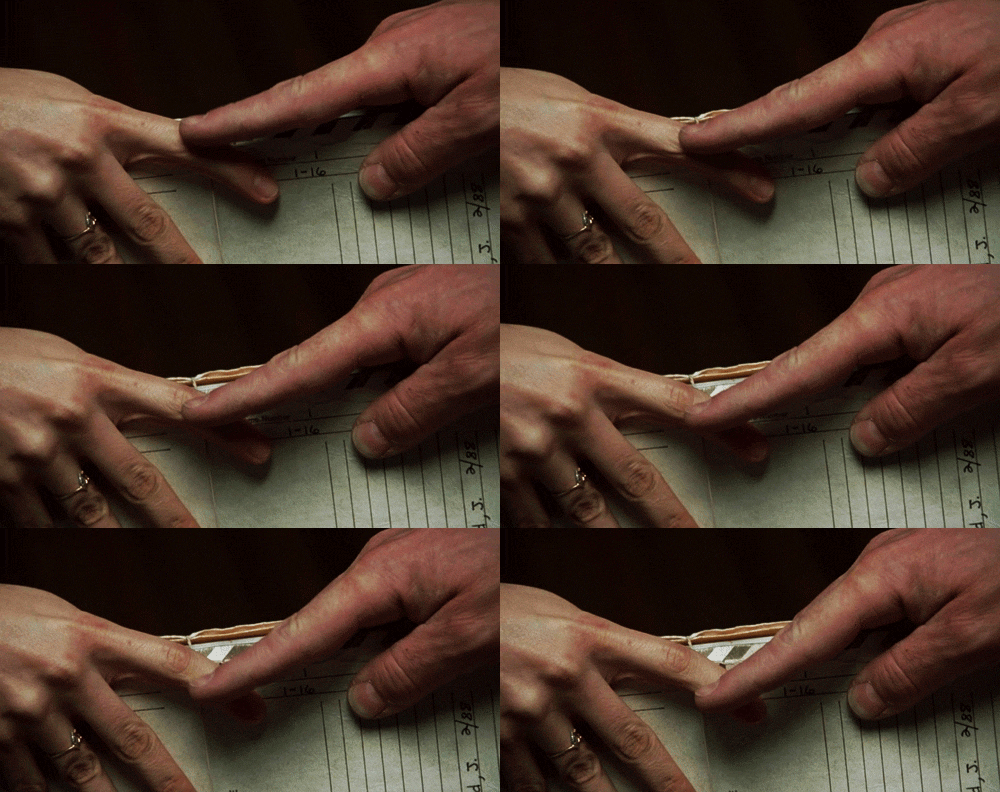
Hannibal Lecter, respecter of women.
Great! So we have this borderline-supernatural character who could have been the only man in the whole movie that shows her any modicum of respect. Doing this would have added another layer to the horrific implications of the movie; that sometimes, the only friends we make are the ones we should not have. I've often experienced that myself where too often the only people that accepted me were people that ended up being a bad influence. Even now, after all these years, I have a strange magnetism with people that contradict my own moral compass. The idea that the only fellowship we have might reside in the same monsters we swore to ourselves we would fight makes for an engaging and intricate display of our humanity. When we reflect upon ourselves and see that we might have to rub shoulders with monsters in order to have any support in a dismal world... Well, that makes for another compelling insight into our own humanity and makes the main character that much more relatable.
Orrr we could just take this exceptional character and reduce him to act exactly like everyone else for no good reason. Ugh.
So maybe the point of this in the movie is that women will always be sexualized no matter to whom they speak, even if he is some wizard/cannibal/psychiatrist that claims he is only interested in her as a person. I mean, that IS a horrifying prospect, but it could have been so much more. For my money, in my humble opinion, whatever that's worth, what is more interesting to me is not being presented with such a world devoid of hope, but instead is having the slightest glimmer of hope in an abysmal darkness, albeit with a caveat. Looking on Hannibal and his attraction to Clarice seems to present a world without hope which, while daunting, does not seem so compelling. And for that matter, while Silence of the Lambs is a fairly agreeable portrayal of serial killers (as agreeable as cold-blooded murders can be, of course) I cannot agree with this sentiment that every man an attractive woman meets is going to objectify her. It is an overgeneralization which, if internalized, would corrode a person's sense of humanity and hope. Granted, this may be the point, but regardless of whether or not this is the intentional "moral" of the story does not change my stance in saying that it is a bad moral.
Yes, humanity is oppressing. Yes, there are dangerous people lurking around every corner of the world. Yes, women of all kinds, whether they look like Jodie Foster or not, will be objectified for their looks. Yes, serial killers really do exist, and despite their gentle, outward demeanor may in fact be willing to manipulate a person's good intentions in order to maim and torture them in the worst way their imagination musters. But no, life is not all serial killers and sexual harassment. Really, I would argue that this pessimistic attitude is partly responsible for the evil of the world we try to condemn, and that when we let this evil we perceive overwhelm us we too often use that as an excuse to be jaded or unduly harsh lending itself to a vicious cycle of human beings giving up their good natures in favor of callousness. I, being cynical myself, am guilty of this erosion of the senses.
But take it from me: giving hope a chance lends even the most bitter of people to having a brighter outlook in all walks of life. Being willing to defy the dredges of mankind in favor of trying to do better has let me internalize the good things of the world. No, I'm not perfect, and neither are any of the other innumerable people I've met in my life, but the simple act of having hope and doing my best to make the world a better place even by just the tiniest amounts has done wonders for my mental health. And people around me have noticed the difference as well.
Okay, that was a lot more serious than intended. Next time I'll try to include more fart jokes to balance things out, and also will take a break from talking about serial killer movies. In the meantime, I will say as a parting shot that for all the problems of Silence of the Lambs, it is still a good movie, and a unique take on the horror genre. I also recommend the Hannibal TV series with Mads Mikkelsen in the eponymous role. While I'm on the subject, I would also like to say that Red Dragon, the prequel to Silence, is actually my favorite between the two. While it isn't as iconic or insightful, I find that I appreciate it more by its internal consistence—it perhaps is not nearly as "smart" as Silence of the Lambs (even considering all the things I just complained about), but it is overall a less frustrating movie and also has much a more interesting chemistry between Dr. Lecter and the protagonist.

No comments:
Post a Comment